IMPLANT PROSTHETIS (CASTED)
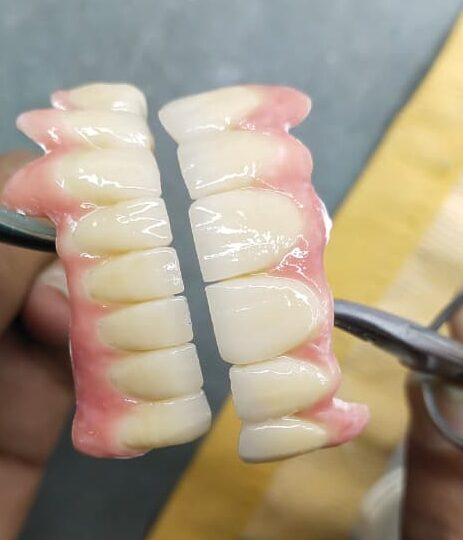
An implant prosthesis (cast/master cast) refers to a highly accurate laboratory model used to fabricate dental prostheses (crowns, bridges, or dentures) that are supported by dental implants. This cast mimics the patient’s mouth, including the exact spatial orientation of the implants, allowing for a passive fit of the prosthesis—a critical requirement to prevent screw loosening, implant failure, and bone loss.
The IPC is a “master” version of a dental model designed to eliminate minor errors that occur during the standard impression-taking process. Because metal frameworks for implants must fit “passively” (without any tension), even a microscopic shift in the model can lead to failure.
To provide an exact intraoral replica of the implant positions. It is used to wax up the framework, verify the fit of a cast bar, and serve as a reliable reference for any necessary laboratory adjustments.
Before the final IPC is poured, a Verification Jig (or Implant Position Record) is often created in the patient’s mouth. This involves connecting temporary components together with a low-shrinkage resin to lock their relative positions in space.
Once the IPC is ready, the actual prosthesis (the “caste” or artificial teeth) is fabricated. These are categorized by how they are secured